|
Despois do duro combate,
Q' o nobre celta Folgar,
Contra do esquivo romano,
Librôu de Xallas no chan;
En que tantos esforzados,
Perdéno a luz xogoral;
No medio da esquiva gandra,
Asomellante ó estrelar,
Que s' apaga receoso,
Do monte Meda detrás;
Morría a linda Maroñas,
D' unha ferida mortal
No branco peito, cal rosa
Cortada do vento soán.
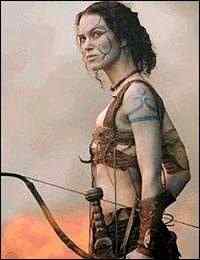
Maroñas, vírgen intrépida,
De magestüoso andar;
A cual os brandos adornos,
Desdeñóu da tenra edá;
E do escudo, e grave yelmo,
Cenguío o corpo lanzal:
E dend' os mais tenros anos,
Se compracía en dobrar
O arco, seguindo os corzos,
Da gandra no esquivo chan.
Das fillas dos nobres celtas,
A mais valente, en verdá;
Quixo éla do seu amado,
Ao lado peleár,
Sin que rogos á fixésen
Ceder, nin volver atrás.
Mil veces o curvo arco,
Brandéra con forza tal,
Que muitos a luz garrida
Do dia, non víran mais;
Cando unha frecha arribando,
Unha dura frecha audaz,
Cravóuse no branco peito,
Onde amor soe aniñar;
E caío cal tenro pino,
Das uces no escuro val.
Mais antes que dése o esprito,
O arco ainda firme na man,
Esto dixo á Margaride,
Bardo da voz sin igual:
—Doce e tenro Margaride,
Do gracïoso mirar;
A quen inda a dura lanza,
Non encallecío as mans;
Tan garrido e brando, como
O doce toxo molar,
Que crece na escura gandra,
No seu tempo xogoral;
Ou Margaride, a tua arpa
Héme muy doce escuitar...»
Dixo a valente Maroñas;
Con voz á do vento soán
Parecida, cando sopra
Por entr' as uces quezáis:
E esto dixo Margaride,
Bardo da voz sin igual:
—Maroñas, boa Maroñas,
Ou vírgen do seo albar,
Com' a escuma das Basontas,
Cando sinten tempestá;
Tan lixeira com' os corzos,
Que fóxen no carballal;
Cal pino da costa d' Ures,
D' esbelto e dereito van;
A valente antr' os valentes,
A quen ben as armas 'stán:
Teus tristes presentimentos,
He de razon olvidar;
Mais o son da miña arpa,
Se che prace, escuitarás.»
E así cantou Margaride,
Bardo da voz singular:
A fror garrida da gandra,
Que no doce mato está;
No seu tallo randeándose,
co sopro do vento soán;
Ó abrigo das hirtas uces,
Nais a sua tenra edá;
Que da tollente giada,
Acougo doce lle dan;
¡Dichos' éla, s' inda nova,
Cand' inda apuntando está
Do abrocho, unha doce causa
A corta amiga en agraz;
Antes que vellez escura,
Ou lodo a veña a manchar!..
Dixo; e ó son das doces cordas,
Maroñas perdendo vai,
A doce cor, e quedóu
Com' apagado estrelar;
Sin luz, e descolorida,
De Xallas no esquivo chan.
E Margaride, antr' as uces,
Erguida tumba lle dá,
A modo dos nobres celtas,
C' unhas antes por sinal;
Para que fósen memoria
Doce da futura edá.
Desde entonces, ou Maroñas,
De Xallas probe lugar:
Tomáche o nome garrido,
Da valente sin rival;
Pois no teu escuro eido,
Maroñas descansa en paz.
|
Following the tough combat
That Folgar the noble Celt
Fought on Xallas' meadows
Against the rude Roman—
In which so many hardy ones
Forsook the gay light—
In the middle of the harsh moor—
Like the starry sky
That fades warily
Behind Mount Meda—
Lay pretty Maroñas dying
From mortal wound
In the white breast like rose
Severed by the sounding wind.
Maroñas, intrepid maiden
Of majestic step
Who from an early age
Despised bland ornaments
And girded her slender body
With shield and heavy helmet—
Who since the most tender years
Delighted in bending the bow
Chasing after roe deer
On the uneven ground of the moor.
Verily the bravest of the daughters
Of the noble Celts
She chose to fight
Beside her lover
With no entreaty making her
Yield or turn back.
She had brandished the curved bow
A thousand times with such strength
That many gazed upon the joyous
Light of day no more
When there arrived an arrow
(A dauntless, cruel arrow)
That struck the white breast
Where love usually nests
And she fell like a pine sapling
In the gloomy glen of tree heaths.
But before the spirit parted from her,
The bow firm in hand still,
She said this to Margaride,
Bard of unmatched voice,
"Tender and sweet Margaride
Of graceful gaze
Whose hands the rigid spear
Has not yet calloused,
As soft and handsome
As the sweet dwarf furze
That grows in the dreary heathland
During its gladsome season:
O Margaride, your harp
Sounds very sweet to my ears..."
So said courageous Maroñas
With a voice like the loud wind's
When it blows through
The tree heaths perchance.
And this said Margaride,
Bard of unmatched voice,
"Maroñas, good Maroñas,
O maiden of white breast
Like the foam of the Basontas
When they feel the tempest,
As swift as the roe deer
That run away in the oak forest,
Of frame as svelte and straight
As a pine's on the coast of Urés,
Brave among the brave,
Whom the bearing of arms suits well:
Reason bids me to disregard
Your sad forebodings,
But you shall harken to the sound
Of my harp if it pleases you."
And thus sang Margaride,
Bard of singular voice:
Heathland's fair flower
That abides in the honey-scented bush,
Its stem waving to and fro
Under the breath of the sounding wind,
Sheltered by hirsute tree heaths—
Her mothers in the tender age
Who shield her lovingly
From the crippling frost—
Blessed she if still young,
Budding still from the star thistle,
A sweet, friendly cause
Should cut her off in the green years
Before sludge or grim old age
Come to sully her!
He spoke and to the cadence
Of the soft strings Maroñas shed
Her sweet colour until she lay
Like faded starlight
Lusterless and ashen
On Xallas' rough terrain.
And Margaride built for her
A raised tomb among the tree heaths
After the custom of the noble Celts,
With some standing stones as token
That they should compose a sweet
Memorial for future generations.
Since then, o Maroñas
Neglected place in Xallas,
You took the gallant name
Of the brave one without rival
For Maroñas rests in peace
On your forgotten farmland.
|